Blog
American Studies
Jun
2
2026
18:00
6:15 p.m. in IG 254
Guest lecture: Tomás Dvorak (FAMU Prague): "AI and the Statistical Imagination in American Culture" | American Studies Research Colloquium SoSe 26

The talk begins from the contemporary centrality of artificial intelligence in American culture, society, politics and the economy. While often framed in terms of cognition or automation, AI is, at its core, a statistical enterprise: it operates through probabilistic inference, pattern recognition and the aggregation of large-scale data. The apparent novelty of AI thus invites a longer historical question: how has American culture imagined the relationship between individual experience and statistical abstraction? The talk will trace the effort to mediate between personal life and large-scale social patterns through statistical forms of knowledge. Such statistical imagination extends beyond formal statistics as a discipline, permeating also visual culture and aesthetic practice. It reflects a recurring desire to render a complex, heterogeneous society legible by linking the concrete and the abstract, the experiential and the systemic.
NELK

May 28, 4pm
Campus Westend, Cas 1.812
Directed by Marcin Wierzchowski, Das deutsche Volk (2025) is a black-and-white feature-length documentary about the events and the aftermath of the shootings in Hanau, Germany, in 2020, in which a far-right extremist killed nine people from ethnic minority backgrounds. Rather than simply recounting what happened on the night of the attacks, the film follows the victims' families over four years, focussing on their suffering and their struggles for justice, accountability, and commemoration. In this lecture, I will discuss how Das Deutsche Volk both documents and performs memory work, while also thinking about how the film entangles public memory with questions about belonging.
Paul Leworthy is Leverhulme Early Career Fellow at Newcastle University. He holds a PhD in Comparative Literature from the University of Edinburgh. His first monograph, The Shape of Memory, will appear with Peter Lang later this year. He is founding co-Editor-in-Chief of Memory Studies Review and host of the Connecting Memories Podcast.
American Studies
Mai
12
2026
18:00
6:15 p.m. in IG 254
Guest lecture: Ian Afflerbach (University of North Georgia): "Sellouts and Selling Out" | American Studies Research Colloquium SoSe 26
Prof. Ian Afflerbach will present research from his forthcoming book, "Sellouts! The Story of an American Insult." For a hundred and fifty years, "selling out" has been a corrosive insult regularly deployed across American society. A remarkably wide range of communities--from feminist activists, to Black politicians, to punk rockers--have all used "selling out" as a shared rhetoric for monitoring group belonging and betrayal, a way to flag group members whose behavior appears corrupt or inauthentic. This talk will provide an overview of the book's contents and argument and a brief look into one section, on American writers "selling out." Finally, Prof. Afflerbach will discuss his own experience shifting from traditional scholarship to writing for a broader public audience and why anxieties about "selling out" also inflects contemporary academic life. "Selling out," Afflerbach concludes, is a moral anxiety that permeates modern American culture.
NELK
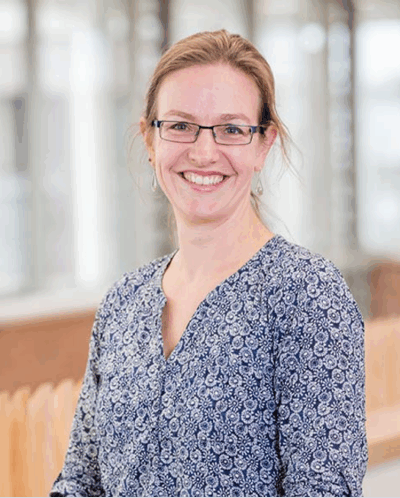
May 7, 4 pm
Campust Westend, Cas 1.812
This talk explores the unique words and phrases used by coal miners in the East Midlands, revealing how language shaped their working lives and communities. Through oral history interviews, miners shared stories about the terms they used underground and how these changed when people moved in from other regions, like the North-East and Scotland. These conversations show that mining language was more than technical – it was part of local identity and culture. Many miners did not realise how important their words were, but they form a vital part of this heritage. Preserving this language helps keep the history and voices of mining alive.
Natalie Braber is Professor of Linguistics at Nottingham Trent University. Her research focuses on the accents and dialects of the East Midlands, including pit talk. Her publications include East Midlands English (2018), Lexical Variation of an East Midlands Coal Mining Community (2022) and Sociolinguistic Approaches to Lexical Variation in English (2025). She works on language as heritage, accent discrimination and language and memory. Her projects include collaboration with those in the fields of creative writing, poetry, photography, art and theatre in order to co-create with local communities.
TEFL
Mai
6
2026
16:00
- 18:00
Informationsveranstaltung: Student Teachers of English School Placement Abroad!