Blog – TEFL
TEFL
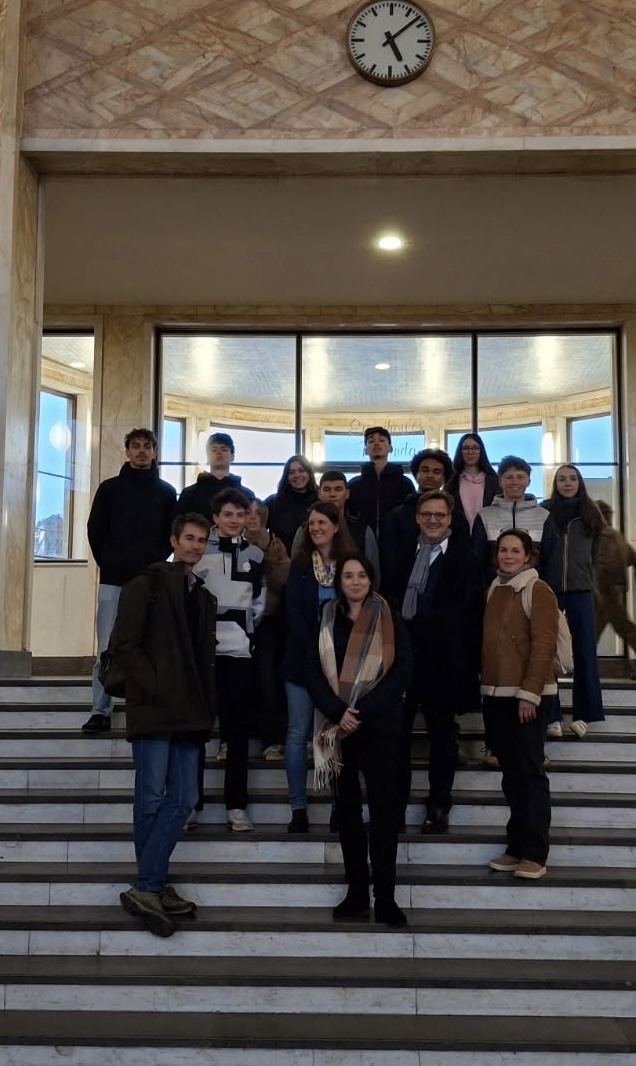
On 11 February, Prof. Dr. Stefanie Frisch (English Language Education) and Prof. Dr. Roland Ißler (French Language Education) welcomed 54 students from Toulouse. The French student representatives had prepared a campus tour in advance, in which all students then took part. The focus was on the education systems in France and Germany. To facilitate communication, German, English and French were spoken, and there was much laughter and amazement.
The meeting came about through a collaboration between Perrine Gourio (University of Toulouse) and Prof. Dr. Stefanie Frisch, who both enable students to participate in a seminar on virtual exchange projects as part of their teaching of English seminars. The purpose of the visit was to intensify the collaboration and to plan further cooperation projects. The possibilities of a bilateral agreement between the Goethe University and the University of Toulouse and internships at French and German schools were explored.
TEFL

This month, the English Language Education/TEFL team said goodbye to long-term colleague Mariella Veneziano-Osterrath. Mariella had been working for Goethe University for more than 13 years and had played an important role in the Praxissemester internship programme, as well as in the departments international exchange programme for students.
TEFL

Will it work? Do we
need more scaffolding? Seeing your own game in action for the first time can be
very exciting! Students in the “English Escape: Breakout games and gamification
in the EFL classroom” seminar spent a full-day session trying and critiquing
each other’s games. The observations and the feedback gathered will informed
the revisions of their games – before they, in the last phase of their projects
– playtest their games at local schools.

TEFL
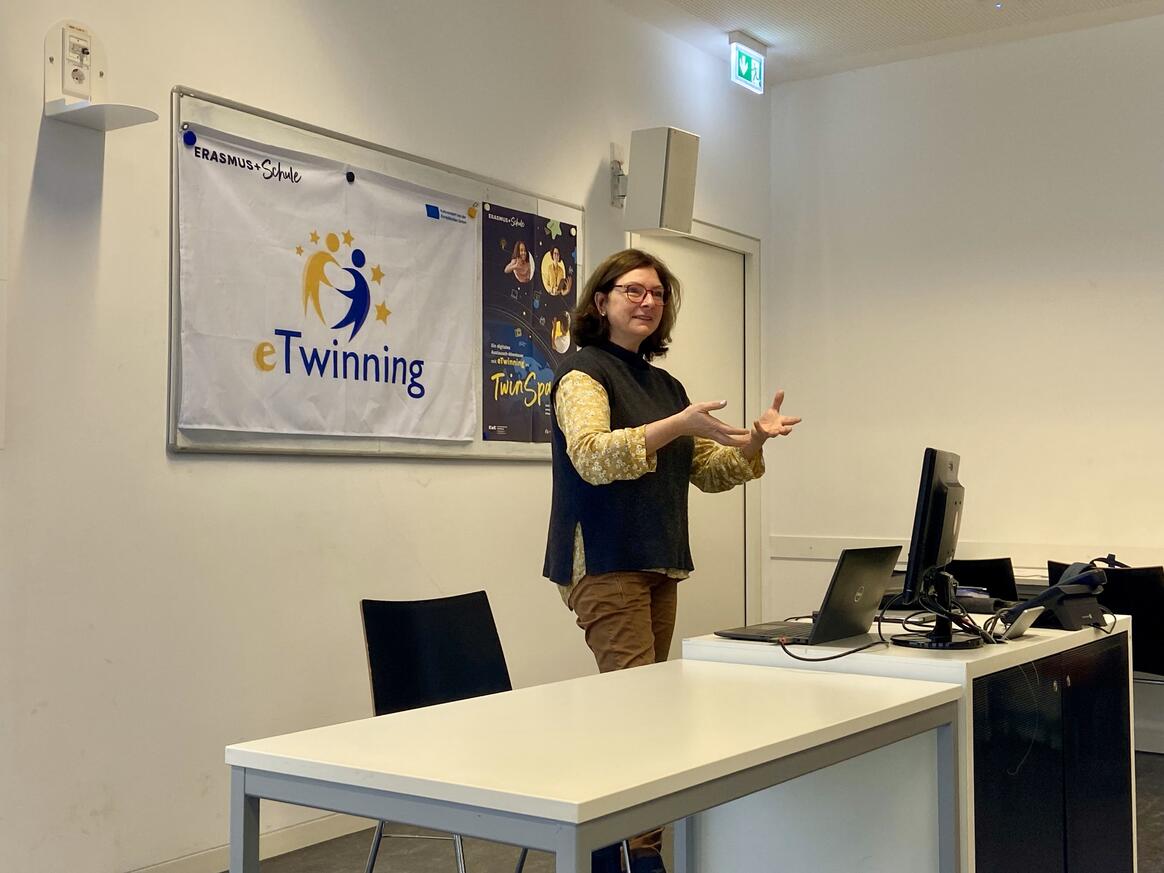
More than
25 students followed Prof. Dr. Stefanie Frisch's (IEAS) invitation to take part in a
workshop on the eTwinning program on 4 December. The European Commission's
initiative networks teachers across Europe to facilitate joint educational
projects across national borders. The aim of Klaudia Gebhardt's workshop (Lehrkräfteakademie
Hessen & Steinhöfelschule Hildesheim/Mainz) was to present the project to
interested students and to explain its potentials as well as its difficulties
in practice.
The programme
offers a network of European schools via the internet and the possibility of
establishing partnerships (Erasmus+) and carrying out joint educational
projects. Since 2022, this has been done through the “European School Education
Platform”. Interested teachers and students can gain access via the university
or their school. The platform can be used to start projects together with
partners from other countries, find partners for one’s own projects, or discover
existing projects by other teachers across Europe.
Klaudia
Gebhardt shared many examples of best practices from her work with eTwinning.
Topics ranged from sharing winter festival traditions to conducting experiments
together in order to better understand the causes of the climate change. Although
it can be difficult to motivate all the students at first, most of them quickly
see the benefits and are enthusiastic about the project, says Klaudia Gebhardt.
„It may not help to get rid of prejudices, but it does help to reduce them,”
she says of her experience with the programme, which she underlines with many
positive examples from students. Students may even make contacts beyond the
school project. Prof. Dr. Stefanie Frisch concluded: „These examples show us
the variety of possibilities there are. In every project, intercultural
learning was promoted to some extent.“
You can
find more information on eTwinning at: https://school-education.ec.europa.eu/en/etwinning/about