Announcements

Announcements

NELK

Jun 23 2026
18:00

Eva von Contzen (Freiburg): Telling Again, Anew, Against: Repetition and Literary History
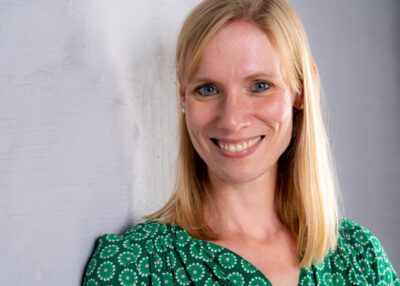
Eva von Contzen_guestlecture_profile
June 23, 6pm
Campus Westend, IG 3.14 (Eisenhower Room)

What does it mean to retell a story? In recent Anglophone literature, retellings have become extremely popular, from Pat Barker's The Silence of the Girls to Percival Everett's James. Retellings use existing, often much older, narrative material, and tell the story anew by adapting it to the needs and expectations of a contemporary readership. Placing the current trend of retellings in its wider context of literary history, I argue that repetition is the key generator of meaning in the retelling process. 

Eva von Contzen is professor of English Literature including the literature of the Middle Ages at the University of Freiburg. She is PI of the ERC-funded project “Retelling and Repetition (DERIVATE)". Her research interests include narrative theory, literary history, reception studies, retellings, and lists. 

Direktlink

NELK

Jun 11 2026
16:00

Postcolonial/postsocialist memories as constellations. Reading ‘returning transitions’ in Anglophone and Russophone literatures

Ksenia Robbe (Groningen University): New Frontiers in Memory Studies: Ksenia Robbe on postcolonial/postsocialist memories as constellations
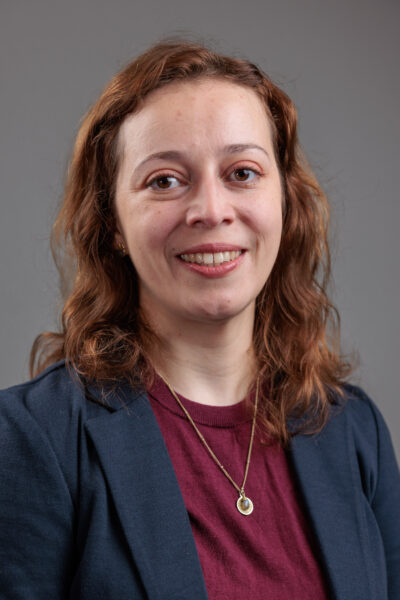
Ksenia Robbe_guestlecture_profile
June 11, 4pm
Campus Westend, Casino 1.812

This talk will reflect on the study of intersections between memories of the Cold-War aftermaths in postcolonial and postsocialist contexts and will propose 'constellational reading' as an approach for discerning and initiating dialogues across such diverse locations. Drawing upon my research on contemporary literatures from South Africa and Russia and through several examples, I will outline how this reading can illuminate global connections between memory practices that centre on the 'transitions' from apartheid and state socialism. Inspired by Walter Benjamin's ideas and applied to memory studies, this method, I will suggest, can yield interpretative tools for reading trans-regionally against geopolitical narratives. 


Ksenia Robbe is a Senior Lecturer in European Culture and Literature at the University of Groningen and currently a Humboldt Fellow at Goethe-University Frankfurt. Her research sits at the intersection of postcolonial and postsocialist studies, with the focus on concepts and practices of memory, time, gender, and feminism in literature and film.


(Photo credit: Ronnie Zeemering)
Direktlink

NELK

Mai 28 2026
16:00

Paul Leworthy (Newcastle University): Public Memory in Postmigrant Germany: Remembering Hanau in “Das deutsche Volk”
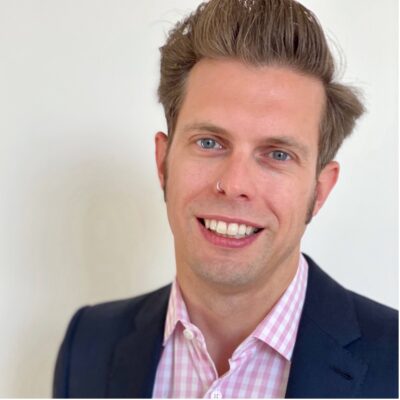
Paul Leworthy_guestlecture_profile

May 28, 4pm
Campus Westend, Cas 1.812

Directed by Marcin Wierzchowski, Das deutsche Volk (2025) is a black-and-white feature-length documentary about the events and the aftermath of the shootings in Hanau, Germany, in 2020, in which a far-right extremist killed nine people from ethnic minority backgrounds. Rather than simply recounting what happened on the night of the attacks, the film follows the victims' families over four years, focussing on their suffering and their struggles for justice, accountability, and commemoration. In this lecture, I will discuss how Das Deutsche Volk both documents and performs memory work, while also thinking about how the film entangles public memory with questions about belonging. 

Paul Leworthy is Leverhulme Early Career Fellow at Newcastle University. He holds a PhD in Comparative Literature from the University of Edinburgh. His first monograph, The Shape of Memory, will appear with Peter Lang later this year. He is founding co-Editor-in-Chief of Memory Studies Review and host of the Connecting Memories Podcast. 
Direktlink

NELK

Mai 7 2026
16:00

Natalie Braber (Nottingham Trent): Working with ‘pit talk’, the language of coal miners in the East Midlands
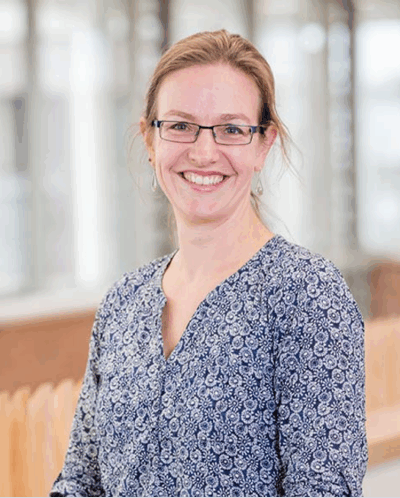
Natalie Braber_guestlecture_profile
May 7, 4 pm
Campust Westend, Cas 1.812

This talk explores the unique words and phrases used by coal miners in the East Midlands, revealing how language shaped their working lives and communities. Through oral history interviews, miners shared stories about the terms they used underground and how these changed when people moved in from other regions, like the North-East and Scotland. These conversations show that mining language was more than technical – it was part of local identity and culture. Many miners did not realise how important their words were, but they form a vital part of this heritage. Preserving this language helps keep the history and voices of mining alive.
Natalie Braber is Professor of Linguistics at Nottingham Trent University. Her research focuses on the accents and dialects of the East Midlands, including pit talk. Her publications include East Midlands English (2018), Lexical Variation of an East Midlands Coal Mining Community (2022) and Sociolinguistic Approaches to Lexical Variation in English (2025). She works on language as heritage, accent discrimination and language and memory. Her projects include collaboration with those in the fields of creative writing, poetry, photography, art and theatre in order to co-create with local communities.
Direktlink

NELK

Apr 27 2026

New Publication: Michelle Stork "Transcultural Automobilities in Contemporary Anglophone Road Narratives"

Dr. Michelle Stork's monograph Transcultural Automobilities in Contemporary Anglophone Road Narratives has just been published as part of the series Studies in Mobilities, Literature, and Culture by Palgrave Macmillan.
Transcultural Automobilities analyzes contemporary Anglophone road narratives from a transcultural perspective. By bringing together texts set in Australia, Africa, Canada, Europe, Aotearoa/New Zealand, India, and the US, it grapples with the road narrative as a global genre as opposed to a traditionally American one. In so doing, it conceptualizes the genre in a deterritorialized manner and highlights engagement with transcultural phenomena through ten close readings.
Building on literary mobility studies, the book interrogates the poetics and politics of automobility, as well as the affordances and limits of this form of mobility. It also contributes to larger debates concerning the role of technologies and infrastructures under global modernity.
In short, Transcultural Automobilities examines the myriad forms road narratives take across diverse geographical settings. It applies literary studies tools to mobility concepts and thereby connects literary, mobility and transcultural approaches.
You can get off 20% with the code PALAUT.
Feel free to contact m.stork[@]em.uni-frankfurt.de for more information. Please also share the book with any interested colleagues and students.
Direktlink

NELK

Feb 5 2026
16:00

HZ 15

Encarnación Gutierrez Rodriguez (Frankfurt): “Decolonial Mourning and Political Memory Work – Thinking through (Dis)compassion and towards a Caring Commons” | New Frontiers in Memory Studies Lecture Series (FMSP)

NELK

Jun 23 2026
18:00

Eva von Contzen (Freiburg): Telling Again, Anew, Against: Repetition and Literary History

Eva von Contzen_guestlecture_profile
June 23, 6pm
Campus Westend, IG 3.14 (Eisenhower Room)

What does it mean to retell a story? In recent Anglophone literature, retellings have become extremely popular, from Pat Barker's The Silence of the Girls to Percival Everett's James. Retellings use existing, often much older, narrative material, and tell the story anew by adapting it to the needs and expectations of a contemporary readership. Placing the current trend of retellings in its wider context of literary history, I argue that repetition is the key generator of meaning in the retelling process. 

Eva von Contzen is professor of English Literature including the literature of the Middle Ages at the University of Freiburg. She is PI of the ERC-funded project “Retelling and Repetition (DERIVATE)". Her research interests include narrative theory, literary history, reception studies, retellings, and lists. 

Direktlink

NELK

Jun 11 2026
16:00

Postcolonial/postsocialist memories as constellations. Reading ‘returning transitions’ in Anglophone and Russophone literatures

Ksenia Robbe (Groningen University): New Frontiers in Memory Studies: Ksenia Robbe on postcolonial/postsocialist memories as constellations

Ksenia Robbe_guestlecture_profile
June 11, 4pm
Campus Westend, Casino 1.812

This talk will reflect on the study of intersections between memories of the Cold-War aftermaths in postcolonial and postsocialist contexts and will propose 'constellational reading' as an approach for discerning and initiating dialogues across such diverse locations. Drawing upon my research on contemporary literatures from South Africa and Russia and through several examples, I will outline how this reading can illuminate global connections between memory practices that centre on the 'transitions' from apartheid and state socialism. Inspired by Walter Benjamin's ideas and applied to memory studies, this method, I will suggest, can yield interpretative tools for reading trans-regionally against geopolitical narratives. 


Ksenia Robbe is a Senior Lecturer in European Culture and Literature at the University of Groningen and currently a Humboldt Fellow at Goethe-University Frankfurt. Her research sits at the intersection of postcolonial and postsocialist studies, with the focus on concepts and practices of memory, time, gender, and feminism in literature and film.


(Photo credit: Ronnie Zeemering)
Direktlink

NELK

Mai 28 2026
16:00

Paul Leworthy (Newcastle University): Public Memory in Postmigrant Germany: Remembering Hanau in “Das deutsche Volk”

Paul Leworthy_guestlecture_profile

May 28, 4pm
Campus Westend, Cas 1.812

Directed by Marcin Wierzchowski, Das deutsche Volk (2025) is a black-and-white feature-length documentary about the events and the aftermath of the shootings in Hanau, Germany, in 2020, in which a far-right extremist killed nine people from ethnic minority backgrounds. Rather than simply recounting what happened on the night of the attacks, the film follows the victims' families over four years, focussing on their suffering and their struggles for justice, accountability, and commemoration. In this lecture, I will discuss how Das Deutsche Volk both documents and performs memory work, while also thinking about how the film entangles public memory with questions about belonging. 

Paul Leworthy is Leverhulme Early Career Fellow at Newcastle University. He holds a PhD in Comparative Literature from the University of Edinburgh. His first monograph, The Shape of Memory, will appear with Peter Lang later this year. He is founding co-Editor-in-Chief of Memory Studies Review and host of the Connecting Memories Podcast. 
Direktlink

NELK

Mai 7 2026
16:00

Natalie Braber (Nottingham Trent): Working with ‘pit talk’, the language of coal miners in the East Midlands

Natalie Braber_guestlecture_profile
May 7, 4 pm
Campust Westend, Cas 1.812

This talk explores the unique words and phrases used by coal miners in the East Midlands, revealing how language shaped their working lives and communities. Through oral history interviews, miners shared stories about the terms they used underground and how these changed when people moved in from other regions, like the North-East and Scotland. These conversations show that mining language was more than technical – it was part of local identity and culture. Many miners did not realise how important their words were, but they form a vital part of this heritage. Preserving this language helps keep the history and voices of mining alive.
Natalie Braber is Professor of Linguistics at Nottingham Trent University. Her research focuses on the accents and dialects of the East Midlands, including pit talk. Her publications include East Midlands English (2018), Lexical Variation of an East Midlands Coal Mining Community (2022) and Sociolinguistic Approaches to Lexical Variation in English (2025). She works on language as heritage, accent discrimination and language and memory. Her projects include collaboration with those in the fields of creative writing, poetry, photography, art and theatre in order to co-create with local communities.
Direktlink

NELK

Apr 27 2026

New Publication: Michelle Stork "Transcultural Automobilities in Contemporary Anglophone Road Narratives"

Dr. Michelle Stork's monograph Transcultural Automobilities in Contemporary Anglophone Road Narratives has just been published as part of the series Studies in Mobilities, Literature, and Culture by Palgrave Macmillan.
Transcultural Automobilities analyzes contemporary Anglophone road narratives from a transcultural perspective. By bringing together texts set in Australia, Africa, Canada, Europe, Aotearoa/New Zealand, India, and the US, it grapples with the road narrative as a global genre as opposed to a traditionally American one. In so doing, it conceptualizes the genre in a deterritorialized manner and highlights engagement with transcultural phenomena through ten close readings.
Building on literary mobility studies, the book interrogates the poetics and politics of automobility, as well as the affordances and limits of this form of mobility. It also contributes to larger debates concerning the role of technologies and infrastructures under global modernity.
In short, Transcultural Automobilities examines the myriad forms road narratives take across diverse geographical settings. It applies literary studies tools to mobility concepts and thereby connects literary, mobility and transcultural approaches.
You can get off 20% with the code PALAUT.
Feel free to contact m.stork[@]em.uni-frankfurt.de for more information. Please also share the book with any interested colleagues and students.
Direktlink

NELK

Feb 5 2026
16:00

HZ 15

Encarnación Gutierrez Rodriguez (Frankfurt): “Decolonial Mourning and Political Memory Work – Thinking through (Dis)compassion and towards a Caring Commons” | New Frontiers in Memory Studies Lecture Series (FMSP)