Blog – NELK
NELK
Intertwining Memory with Narrative Tempo: Examining Memory through Narrative Pace in select Indian Novels
Guest lecture by Shipra Tholia (Banaras Hindu University)
November 12, 2024, 4.15 pm
Campus Westend, Casino 1.812

Narrative Pace offers a unique perspective for the analysis of memory literature. In memory literature, the change in narrative pace is particularly evident because the representation of memory encourages a variety of narrative pacing strategies – from acceleration to deceleration. My argument is that the five narrative paces influence the way memory is conceptualized. I will use the novel The Palace of Illusions by Chitra Banerjee Divakaruni as the basis for my discussion in this lecture. A rewrite of the Indian epic novel Mahabharata is attempted in this novel from the perspective of Draupadi (the female protagonist). In this novel, Draupadi recalls all the events of her childhood, her young self, and everything leading up to the Mahabharat War. On a self-reflective level, her process of remembering enables her to identify herself.
Through the iterative-durative contraction, a more explicit emphasis is placed on the character's trauma or the timelessness of the content remembered. In contrast, narrative pace summaries and ellipses emphasize the complexity of remembering, the sense of loneliness, and the tension inherent in the story. The use of ellipses does not necessarily mean that the memory is less important, but is rather used in order to advance the plot or to show memory gaps. Due to the narrative pace stretch, a psychological impact is generated, as well as a detailed evaluation and observation of memories. Additionally, the narrative pace pause can sometimes serve as a catalyst for contemplative reflection on one's own existence, as the character recalls. A narrative pace pause may be used to highlight different emotions. As a result of the narrative pace scene, the act of remembering is perceived as a reflexive and dialogic activity. This helps in the process of suturing the memory threads for the purpose of understanding oneself.
Of course these five narrative pace serve a variety of functions that go beyond these; their more significant contribution is to aid in conceptualizing memory.
NELK
Postcolonial Memory Films in the Dutch-Indonesian and German-Namibian Context: De Oost and Measures of Men
Guest Lecture by Dr. Arnoud Arps (University of Amsterdam) & Dr. Kaya de Wolff (Goethe University Frankfurt, TraCe)
Tuesday, Nov 5, 4.15 pm
Campus Westend, Casino 1.812

In recent years, postcolonial struggles over memory have produced a wave of film productions across various European cinemas. In 2020, the Dutch film De Oost [The East] was released on Amazon Prime. Three years later, in 2023, Der vermessene Mensch [Measures of Men] hit theatres across Germany. These films have a commonality: they cinematically represent underrepresented colonial histories. Moreover, both films were widely promoted as being the first to address particular episodes in Dutch and German colonial history that had been silenced in public discourse/memory. For De Oost it is the structural violence committed by Dutch perpetrators during the Indonesian War of Independence (1945-1949); for Der vermessene Mensch it is the German genocide against the OvaHerero and Nama people in Namibia (1904-1908). While these topics may seem to promise a decolonial perspective on history, we argue that the films' selective narratives and stereotypical visual representation patterns impose restrictions on this potential. Instead, we will focus our comparative study on the production context of these films with a particular emphasis on distribution and promotion. We contend that the most comprehensive way to understand the cultural meaning of these postcolonial films is to analyse what Astrid Erll and Stephanie Wodianka (2008) call “plurimedial constellations", meaning how these productions evolve in networks of media and social practices of collective memory. We do this by analysing the public debates around these films, asking how these films have been framed in promotion events, and by focusing on the media that are tied into the films. By analysing these plurimedial constellations, we map out how these films – each in its own way – are ambivalent and paradoxical. While they perpetuate elements of colonial thinking, their contextual existence simultaneously destabilises dominant structures of knowledge about the colonial past. Their seeming incongruity is what we propose to be a key element of contemporary European postcolonial memory films.
Arnoud Arps is Assistant Professor of Extended Cinema, Film Heritage and Memory at the University of Amsterdam and Academic Staff Member at the Amsterdam School for Heritage, Memory and Material Culture. Prior to this he was a Niels Stensen Postdoctoral Fellow in Postcolonial and Memory Studies at the University of Oxford and the University of California, Los Angeles. His work investigates how the colonial era is transculturally, transnationally, and cross-medially remembered in Indonesia and the Netherlands with a special interest in cinema, literature, and popular culture. More information can be found on his website: www.arnoudarps.com
Kaya de Wolff is a research associate at the Institute for English and American Studies at Goethe University Frankfurt. As a media scholar, she engages critically with the intersections of memory, media and communication, (post)colonialism and social justice. Kaya gained her PhD with a dissertation on the struggle for recognition of the genocide against the Ovaherero and Nama in the German press coverage (published by Transcript, 2021, Open Access). She works – jointly with Prof. Dr. Astrid Erll – within the interdisciplinary regional research network “Transformations of Political Violence Centre – TraCe" (2022-2026). Her post-doctoral research project investigates collective memories related to the histories of enslavement, colonialism and dictatorship in Brazil. For more details, see her profile on Frankfurt Memory Studies Platform.
NELK
Travelling and Translating between Worlds: Early Modern Mobility in Leo Africanus’ The Cosmography and Geography of Africa (1526)
Guest lecture by Dr. Jennifer Leetsch (Bonn)
Room CASINO – CAS 1.802
This talk explores the multifaceted exchanges and mediations at work in The Cosmography and Geography of Africa (1526), an account written by the diplomat and scholar al-Ḥasan ibn Muḥammad al-Wazzān al-Zayyātī (today more commonly known as Leo Africanus). Born in Granada and educated in Morocco, al-Wazzān lived at the crossroads of Islamic and Christian worlds. On one of his extensive trips through North and West Africa, he was captured by pirates and taken to Pope Leo X's court in Rome, where he converted (or was forced to convert) to
Christianity. His Cosmography, which he wrote during this time, can be understood as a key source of knowledge about Africa for early modern Europe—it stands as a text that moves across multiple spheres: geographically, linguistically and intellectually.
Al-Wazzān's unique positioning between Africa and Europe allowed him to mediate knowledge about Africa for European audiences while subtly challenging European preconceptions about the continent. As the first detailed account of Africa written by a modern African to reach print in Europe, the Cosmography represents more than just a geographical treatise—it is a dynamic site of early modern cross-cultural exchange and knowledge production. Al-Wazzān's life and work reflect the fluidity of identities and the intricacies of translation as both literal linguistic acts and as metaphorical negotiations between conflicting worldviews. By centring this early modern traveller and a text that journeyed across time, space and multiple translations, this talk hopes to shed light on complex and complicated early-modern encounters between Africa and Europe, positioning both al-Wazzān and the Cosmography as mobile, fluid agents traversing different worlds.
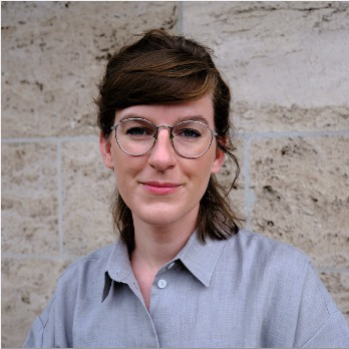
Jennifer Leetsch is a postdoctoral researcher at the University of Bonn's excellence cluster, the Bonn Center for Dependency and Slavery Studies, where she is currently working on a project that aims to connect Black life writing to eighteenth- and nineteenth-century ecologies. She has a PhD in English Literature from the University of Würzburg and has recently held fellowships and guest lectureships at the University of Melbourne, the University of Glasgow and Jawaharlal Nehru University Delhi. Her first book on contemporary African Diasporic women's writing appeared with Palgrave in 2021, and she is co-editor of Configurations of Migration: Knowledges – Imaginaries – Media (De Gruyter 2023) and editor of a double special issue on Ecological Solidarities across Post/Colonial Worlds (2024).
More on the Forum of Global Anglophone Literatures and Cultures: 

NELK
Between Empathy and Innocence: Prosthetic Memory and its Pitfalls in Iben Mondrup’s Greenland Trilogy
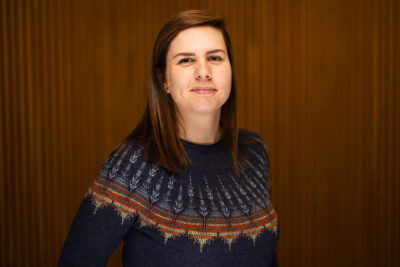
Guest Lecture by Emilie Dybdal (Department of Cross-Cultural and Regional Studies, University of Copenhagen)
Tuesday, October 29, 16:15
Campus Westend, Casino 1.812
The dominant narrative in Denmark has long been that Danish colonialism in Greenland was particularly mild and benign, emphasizing the Danes' altruistic efforts to protect the Greenlandic 'people of nature' and help them transition gently into modernity. However, Danish author Iben Mondrup's trilogy of novels – Tabita (2020), Vittu (2022), and Bjørn (2023) – challenges this narrative by depicting the traumatic experiences of two Greenlandic children who are 'stolen' by Danish families and subjected to neglect and trauma. This paper examines the trilogy's potential impact on Danish cultural memory. Drawing on Alison Landsberg's concept of “prosthetic memory", it argues, on the one hand, that the novels can foster empathy and awareness of colonial injustices among Danish readers. On the other hand, it also raises the concern that these prosthetic memories could become what Eve Tuck and K. Wayne Yang call “moves to innocence" – strategies allowing Danish readers to alleviate feelings of guilt or discomfort about the ongoing effects of colonialism without actually addressing or dismantling colonial structures.
NELK
Book Launch | 11 July 2024, 6-8pm, IG 1.314 (Eisenhower room)
Kathrin Bartha-Mitchell's Cosmological Readings Cosmological Readings of Contemporary Australian Literature
Meeting ID: 636 5786 0914
Passcode: 326944
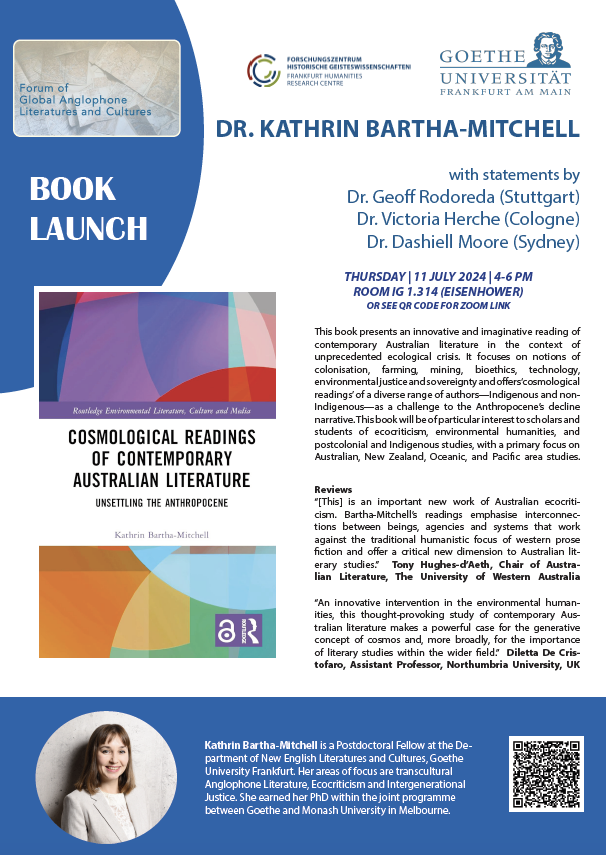
With statements by Victoria Herche (Cologne), Geoff Rodoreda (Stuttgart) and Dashiell Moore(Sydney).
This book presents an innovative and imaginative reading of contemporary Australian literature in the context of unprecedented ecological crisis. It focuses on notions of colonisation, farming, mining, bioethics, technology, environmental justice and sovereignty and offers 'cosmological readings' of a diverse range of authors—Indigenous and non-Indigenous—as a challenge to the Anthropocene's decline narrative. This book will be of particular interest to scholars and students of ecocriticism, environmental humanities, and postcolonial and Indigenous studies, with a primary focus on Australian, New Zealand, Oceanic, and Pacific area studies.
Reviews
“[This] is an important new work of Australian ecocriticism. Bartha-Mitchell's readings emphasise interconnections between beings, agencies and systems that work against the traditional humanistic focus of western prose fiction and offer a critical new dimension to Australian literary studies." Tony Hughes-d'Aeth, Chair of Australian Literature, The University of Western Australia
“An innovative intervention in the environmental humanities, this thought-provoking study of contemporary Australian literature makes a powerful case for the generative concept of cosmos and, more broadly, for the importance of literary studies within the wider field." Diletta De Cristofaro, Assistant Professor, Northumbria University, UK
Kathrin Bartha-Mitchell is a Postdoctoral Fellow at the Department of New English Literatures and Cultures, Goethe University Frankfurt. Her areas of focus are transcultural Anglophone Literature, Ecocriticism and Intergenerational Justice. She earned her PhD within the joint programme between Goethe and Monash University in Melbourne.