Blog – NELK
NELK
The Global More-than-Novel: The Global Novel as Form and Object
Cancelled: Guest lecture by Dr. Jernej Habjan (ZRC SAZU)
NELK
Memorializing border deaths in Europe
Guest lecture by Dr. Karina Horsti (Jyväskylä)
Tuesday, January 21, 4pm CET
Campus Westend, Casino 1.812
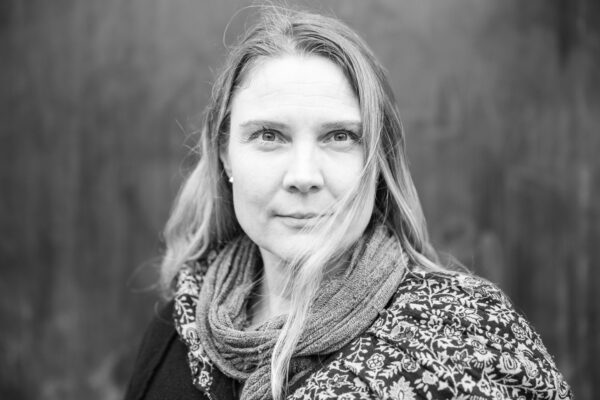
From states to activists, people and communities insert their politics into memorialisation of deaths of unknown strangers at Europe's borders. Memorializing tells something about those who memorialize. This talk discusses the intersections of different memorials and memorial performances, focusing on a decade of afterlives of the Lampedusa shipwreck in 2013. It shows how public memorializing of migrant deaths at borders in Europe serves two functions. First, memorialization is instrumentalized to make a political point or to create a community. Second, memorializing serves a therapeutic function as it helps people to cope with loss or having witnessed mass death – either in person or through the media. The politics of memorialization are multifaceted and can be transformative. In the afterlives of the Lampedusa disaster, Eritrean diasporic politics intersect with European politics creating new identities as survivors and the families of the victims make border violence visible, real and grievable. In doing so, they question the honesty of European values of equality and democracy. They project the unsustainability of the horrific present and future, and in doing so they become part of Europe.
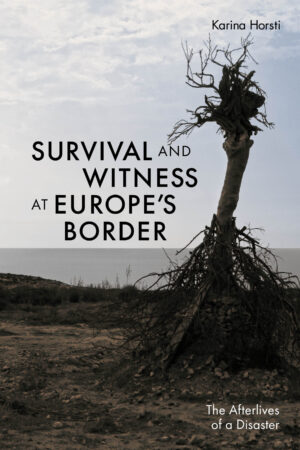
The talk is based on a book Survival and Witness at Europe's Border (Cornell UP 2023) and a documentary film project Remembering Lampedusa. It is followed by a 15 min section of documentary film The Night My Brother Disappeared (2022) by Anna Blom and Adal Neguse where survivors of the Lampedusa disaster narrate their memories of the disaster and their process of survival.
NELK

Symposium and Book Launch
04
Dec 2024, Casino 1.801
18:00-20:00
& Zoom
Insurgent Cultures.
World Literatures and Violence from the Global South (Cambridge University
Press, 2024) by Pavan
Kumar Malreddy.
With Sinan
Antoon (New York), Delphine Munos (Liège), Miriam Nandi (Leipzig), Tom McCarthy (Berlin)
and Auritro
Majumder (Houston)
Chair: Frank Schulze-Engler
Participation via Zoom
is possible: https://zoomto.me/OUO5Z | Passcode:
878754
Contact: c.argast@em.uni-frankfurt.de
Organized by
ConTrust—Trust in Conflict, the Forum of Global Anglophone Literatures and
Cultures & The Department of New English Literatures and Cultures
NELK
The “Creative” Manipulation of Human Memory by AI
Guest lecture by Amar Singh (Banaras Hindu University)
November 19, 2024, 4.15 pm
Campus Westend, Casino 1.812
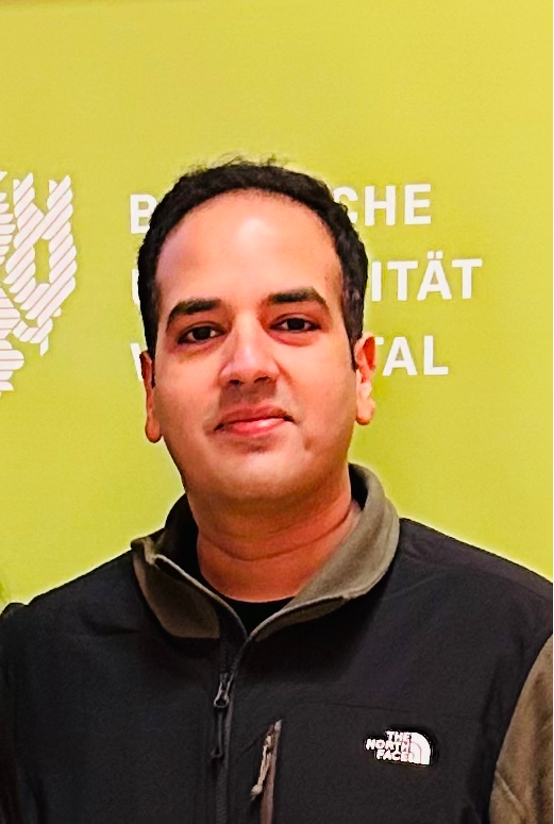
The vast amount of data that is readily uploaded through the internet and cloud computing and made accessible to the public has produced a substantial archive of information, which requires the excavation from artificial intelligence now to allow the biological memory to cope with overinformation that it is unable to accommodate by itself. Nevertheless, this emerging technology in the form of artificial intelligence is no longer innocuous. It is capable of not only supplementing human memory in the form of supporting it but also manipulating and even replacing it. This leaves us with more questions than answers concerning the nature of memory regarding human understanding and creativity when dealing with the electronic species capable of exerting influence largely independent of any human involvement.
The discussion here will focus on cinema, which could be considered a repository of human memory to address questions of this nature. Cinema has always sought to position itself as an “intellectual robot" (Jean Epstein) equipped with a “kino-eye" (Dziga Vertov) capable of revealing things that humans may never be able to discern on their own. Nevertheless, cinema has so far been subject to the controlled manipulation of humans. Nonetheless, AI has enabled the intellectual robot to become free, as can be seen in the work of AI Benjamin, a scriptwriter for a few films, whose vision was then interpreted by actors. When given the opportunity, AI Benjamin wrote, directed, and even “acted" in Zone Out, a film prepared from open-source data of online films. Is there anything creative about what AI Benjamin did with its algorithmic manipulation and what it means for human memory when interacting with an active “new memory?"
NELK
Sanctioned Migration and the Figure of the Trespasser
Guest lecture by Prof.Dr. John McLeod(Leeds)
Room IG 311
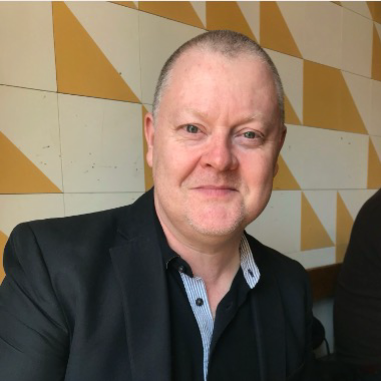
John McLeod is Professor of Postcolonial and Diaspora Literatures at the University of Leeds, UK. He is the author of Global Trespassers: Sanctioned Mobility in Contemporary Culture (LUP, 2024), Life Lines: Writing Transcultural Adoption (Bloomsbury, 2015), Postcolonial London: Rewriting the Metropolis (Routledge, 2004), and Beginning Postcolonialism (MUP, 2000), as well as co-editor of the Ohio State University Press book series, 'Formations: Adoption, Kinship, and Culture'.
More on the Forum of Global Anglophone Literatures and Cultures: